

At our Possip event, Sustaining Strong Schools: Strategies for Staff and Teacher Retention, one of our top recommendations for administrators includes giving meaningful feedback and support.
Possip’s Manager of Knowledge and Content, Mandy Wallace, provides a compilation of effective action steps for administrators to improve their relationships with staff.
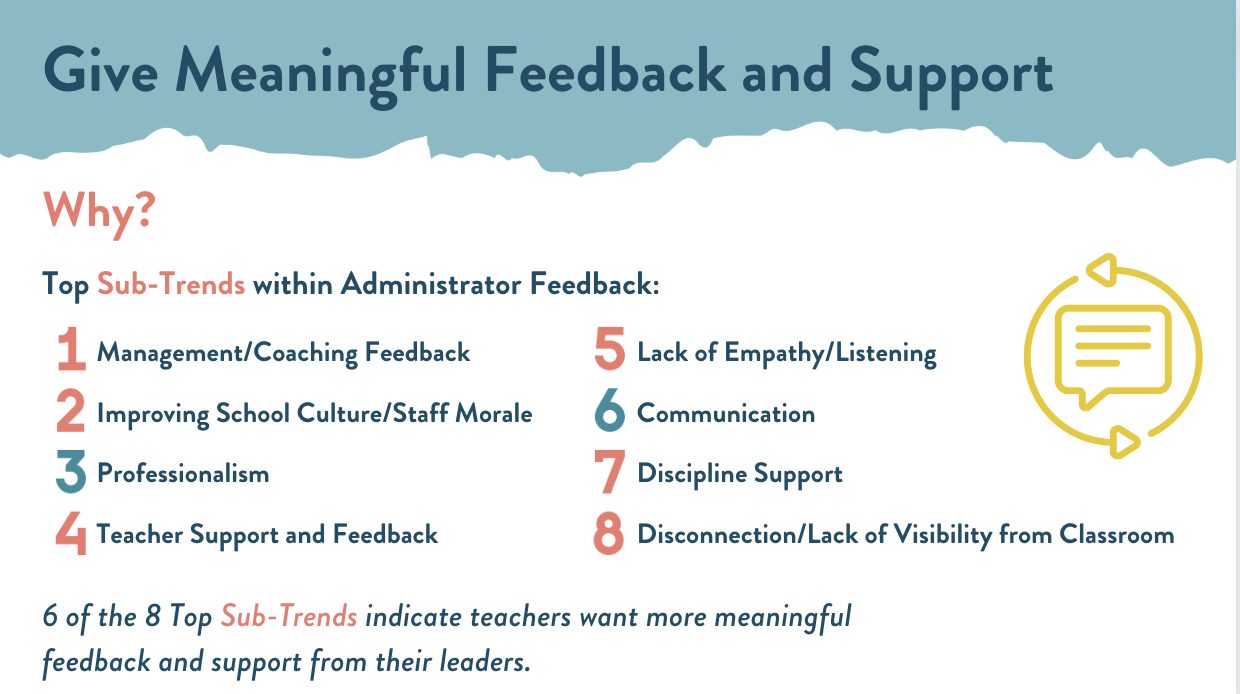
We base this recommendation on data from our Staff Pulse Checks®. Over the 2022-23 school year, staff’s #3 top feedback trend revolved around their leaders and administration. Our data shows that within feedback staff gave about their administration, these sub trends emerged:
We also realized that this concern grows throughout the year for teachers. In the graph below, notice how administration feedback increases in each quarter. 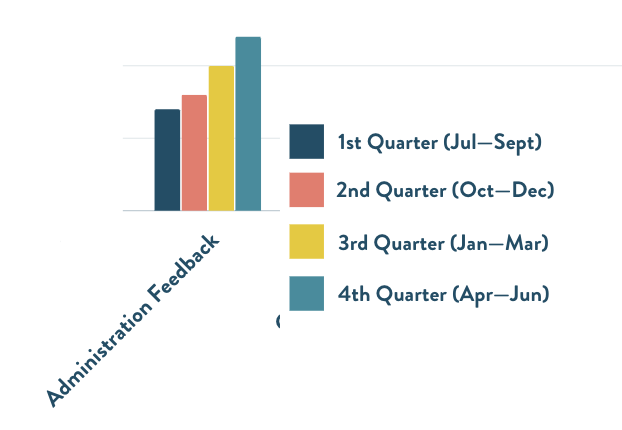
What can administrators do, knowing this information? Here are four things to focus on to address concerns your staff might have head on:
-
-
Improve Your Feedback Delivery
-
Identify and Support Overwhelmed Teachers
-
Support Teachers Over Holiday Breaks
-
Provide Adequate Teacher Training
-
1. How To Improve Your Feedback Delivery
A version of this guidance was originally penned by Shani Dowell in December 2020.
Build a Relationship
It’s never too late to cultivate relationships with the people that are invested in your school’s success– teachers, school leaders, counselors, etc. So much easier to share feedback with someone you have a relationship with.
Choose the WAY you’ll share staff feedback
This is when Possip comes in especially handy– being able to share feedback is always at your fingertips. If Possip is not yet at your school, email is a good option during these times. Or set up a time to check in!
Positives First
When I was a classroom teacher, I always used a “feedback sandwich”- praise, feedback, praise.
Framing
As your teammate, your staff ultimately share your goals: to provide the best possible education to each child at your school. If you have a concern, present it as a problem to solve, and enlist them in helping to solve it.
Be Proactive and Don’t Hesitate
If you are concerned, don’t sit on it. It’s usually easier to address issues in the moment. Don’t hesitate–for the most part, teammates are eager for feedback when it’s constructive and can help them do their job better!
2. Identify and Support Overwhelmed Teachers
Possip originally posted a version of these tips as part of a series supporting principals in November 2019.
Identify struggling teachers and staff
Be attentive! Ask questions one-on-one and offer individualized support if you notice:
-
- Increase in behavioral referrals
-
- Lack of participation in meetings
-
- Late to meetings
-
- Decrease in collaboration
Once you identify struggling teachers, here are five ways to support them:
Set open office hours
Have an open door policy and set office hours to remind staff you are there for them. Sometimes just giving a genuine invitation to talk can be a support to teachers.
Targeted praise and encouragement
Teachers may feel like they are not doing a good job even though they are! Remind them of why they are high-performing in your eyes and show appreciation for their strengths.
Help teachers and staff create work-life boundaries and hold them accountable
Get to know what your teachers like to do with their free time that brings them joy and hold them accountable to doing that by asking questions and having regular check-ins about how their work-life balance is going.
Increasing investment through learning a new skill or taking on a new leadership opportunity
If the teacher is losing investment, try giving him or her something new to learn about. It could be learning about a new instructional practice or giving them a new leadership opportunity on campus.
Invite staff feedback
Make sure your staff know that you are receptive to feedback. Equip them with confidence by encouraging them to share their thoughts. We’ll go into more details on this later.
3. Support Teachers Over Holiday Breaks
These tips were originally posted in a detailed plan to address mid-year vacancies (October 2019).
Connect staff socially
This could be an optional happy hour, dinner, or get-together that your sunshine committee plans over the break. Having social events can help teachers stay connected to each other and create a strong sense of belonging.
Intentional messaging over break
Send a scheduled shout-out email mid-way through break to your staff to increase positivity over break. If you are a texter, send texts to teachers to let them know that you’re thankful for them. Handwritten appreciation snail mail is a great mid-break surprise to teacher’s home as a mid-break appreciation feedback gesture.
Appreciation event right before break for staff
Send teachers off feeling positive and appreciated. They’ll leave for break feeling great about the staff feedback and working at your school!
Classroom cleaning/organization help
This is especially helpful for first year teachers. It could be helping them organize their desk, files, or a bookshelf, or just help clean the room. It helps teachers leave for break feeling in more calm and organized in their room. This tip will also boost morale with a clean slate coming back from break in their welcoming space.
Staff book club
This could be for teachers who want some extra PD over break. It helps them stay connected with the school and get some good reading in.
Encourage self-care
Encourage self care and model it yourself! Here are five ideas to help you and your staff recharge over the holidays.
4. Provide Adequate Staff Training
Possip originally posted a version of these tips as part of a series supporting principals in November 2019.
Continuous professional development is crucial. Providing relevant and effective training can help teachers feel more competent and confident in their roles. Here are four ways to support teachers professionally:
Differentiated coaching: Individualized Development Plans (IDPs)
Creating an Individualized Development Plan for each teacher is an effective method to see strong improvement in specific skill areas that require growth. Systems of differentiated coaching are great for supporting teachers who are struggling in their classrooms, along with supporting your high performers.
Using a differentiated coaching model called Individualized Development Plans (IDP) helps teachers reach success in the classroom faster. Having IDPs not only helps teachers focus on specific individualized areas they need to work on, but it clarifies the administrator/coach’s role in the support plan. Having teachers understand what support they will be getting and the rationale behind the support in relation to their goals is key to them reaching success as an educator.
Teacher mentors
Having a strong teacher mentor program on campus can make all the difference for new or struggling teachers. Having a mentor creates an informal support system for teachers and allows them to ask for advice on things they may not want to come to the administrators about. This also allows strong teachers to take on a leadership role on campus. I refer to this idea of a “companion plant” presented in this article about mentor teachers and the importance of them: https://www.cultofpedagogy.com/marigolds/
Model or co-observations
Sometimes teachers just need to see the skills that they are struggling with done well to really grasp it. An administrator could model the skill in the teacher’s classroom as a support to the teacher. If that option isn’t ideal, an administrator or coach could do campus co-observations to look for one skill being utilized. Having a walk-through tool or note catcher for the teacher on the things you want them to be looking for is important for facilitating co-observations.
Sponsoring outside courses or PD sessions
If teachers are struggling with a skill, sponsoring them to take a community college or online course might be helpful. You can also refer them to online content like Khan Academy.
–
We know from our data that staff feedback escalates throughout the year regarding their leaders and administration. What can you do today to help curb that trend in your building? For more ideas or to learn what your staff is most concerned about, contact Possip today!